06/05/2026
What HMRC expects from your R&D tax claim
HMRC R&D guidance sets clear standards for compliant claims. Find out how to prepare, support, and submit your R&D tax claim to meet HMRC expectations.
06/05/2026
HMRC R&D guidance sets clear standards for compliant claims. Find out how to prepare, support, and submit your R&D tax claim to meet HMRC expectations.
Many businesses treat HMRC R&D guidance as background reading. That is a mistake.
When preparing an R&D tax relief claim, HMRC’s Guidelines for Compliance set a clearer standard for what a claim should look like if it is going to stand up properly. If your project explanations, cost treatment, or supporting records are weak, the claim becomes more difficult to justify and defend in the event of a compliance check. Businesses now need to understand what HMRC expects before they submit an HMRC R&D claim, not after questions start appearing.
The key points below focus on where businesses most often come unstuck.
HMRC’s Guidelines for Compliance are practical documents that show businesses and advisers what a well-prepared claim should look like. They do not replace the legislation, and they do not change the legal tests for claiming R&D tax relief. They show the standard HMRC will usually expect when a business identifies qualifying activity and supports the technical explanation and costs in the claim.
They help businesses see what a better-prepared claim looks like and where weaker claims usually start to fall apart. A business can read the basic rules and still build a poor claim. The problem often starts when a business describes the project too broadly or cannot explain clearly how it arrived at the figure.
Easy R&D helps businesses prepare R&D tax relief claims by reviewing qualifying activity, supporting records, and cost treatment against HMRC R&D guidance.
HMRC has put more focus on compliance because it wants businesses to submit more accurate claims with clearer support behind them. Businesses now need to think more carefully about how they prepare a claim before they submit it.
In practice, it changes what a business needs to get right before submission. A claim can no longer lean on broad statements about innovation, generic descriptions of development work, or weak supporting records. HMRC will usually expect the business to explain the uncertainty it faced, the work carried out to resolve it, and how it arrived at the costs in the claim.
This does not mean that claims are less likely to be eligible, but the standard for preparation and supporting evidence is now significantly higher.
The guidance pushes businesses to get the claim logic right before submission.
That starts with identifying qualifying activity properly. Not every project or activity will meet the R&D tax rules. The business needs to understand which parts of the work fall within the R&D tax rules and which do not.
Businesses also need records that can support the claim. That includes project notes, technical explanations, staff input, and cost records that connect clearly to the qualifying activity in the claim.
The guidance expects businesses to explain the technical side of the work properly. Broad language is where many claims start to drift. Innovation and improvement are not enough on their own. The claim needs to explain the uncertainty the business faced, the work the team carried out to resolve it, and how that work meets the requirements for inclusion in the claim.
Cost treatment is also important. Businesses need to demonstrate how the costs included in the claim were identified and how they are linked to qualifying activity. If the link between the project, the costs, and the final figures is not clear, the claim becomes more difficult to support.
If any part of your HMRC R&D claim still feels unclear, Easy R&D can review it with you before submission and help you tighten the areas that need stronger support.
This is often the point where claims start to weaken.
One common mistake can be treating all technical work as qualifying, even though a business may carry out genuine development work that does not all qualify for inclusion in the claim.
Another is relying on vague language. Words like innovation and development are not enough on their own. The claim needs to explain what technical uncertainty existed and what work the team carried out to resolve it.
Weak records create another problem. Many businesses keep records that help them deliver a project but do little to support an R&D tax relief claim. If project notes, staff input, or cost records do not clearly connect to the claim, the figures become much harder to support and defend.
Some businesses assume they can fix a broad interpretation later if questions come up. That is a poor approach. Weak claim logic rarely improves once the wording is already doing too much work.
Before submitting a claim, ask a simpler question first. What records does HMRC expect to see behind the claim? HMRC will usually expect records that support the technical explanation, the project activity, staff input, and the cost treatment in the claim. Not every business needs the same format of evidence, but each one needs a clear record of the work and how the numbers connect back to the claim. This is often where claims start to feel thin, managing directors may understand the project well, but the records behind the figure do not always reflect that same clarity.
An R&D claim now sits alongside the Additional Information Form, so businesses need to ensure that both the explanation and supporting detail are clear before submission. It is also important to review the areas that will carry the most weight if HMRC examines the claim more closely, starting with the project narratives. Do they clearly explain the technical uncertainty, or do they rely on broad statements about product development and innovation?
Next, review the qualifying activity and cost treatment together. Has the business separated qualifying work from wider commercial, administrative, or delivery activity? Can it explain how costs were identified and why they relate directly to the work included in the claim? These links need to be clear and consistent throughout the submission.
Finish by reviewing the claim process itself. Who prepared the claim, what assumptions were made, and can the team explain clearly how it arrived at the figure? Where those answers are weak, it is worth pausing before submission. This is often the point where outside support becomes useful, with Easy R&D helping businesses review the claim and identify the areas that need stronger support before it is finalised.
Businesses usually need specialist help when the claim is complex, the records need tightening, or the team does not feel fully confident about what qualifies. At that point, an eligibility check can help a business sense-check the claim before it goes further.
That support helps a business tighten the project narrative, cost treatment, and supporting records before the claim goes in.
This is where Easy R&D can help. The team helps businesses line up the project narrative, cost treatment, and supporting records before submission, so management can explain the figure more clearly and spot weak areas earlier.
HMRC’s Guidelines for Compliance matter because they raise the standard a business needs to meet when it prepares and supports an HMRC R&D tax relief claim.
Use that guidance to test the claim before submission. That is often the point where weak explanations, weak records, and weak cost treatment become obvious.
Want to strengthen an R&D tax relief claim before you submit it? speak to Easy R&D. The right support can help you submit a claim the team can explain clearly if questions come back later.
They are practical guidance documents that help businesses and advisers prepare better-supported R&D tax relief claims.
No. They do not change the law. They help businesses understand how to interpret the rules and support claims more effectively.
HMRC will usually look for a clear explanation of the qualifying activity, how the business identified the costs, and records that support the technical and financial detail behind the claim.
It means businesses need to make sure the explanation and supporting detail behind the claim are clear before submission, because HMRC now expects a more structured set of supporting information.
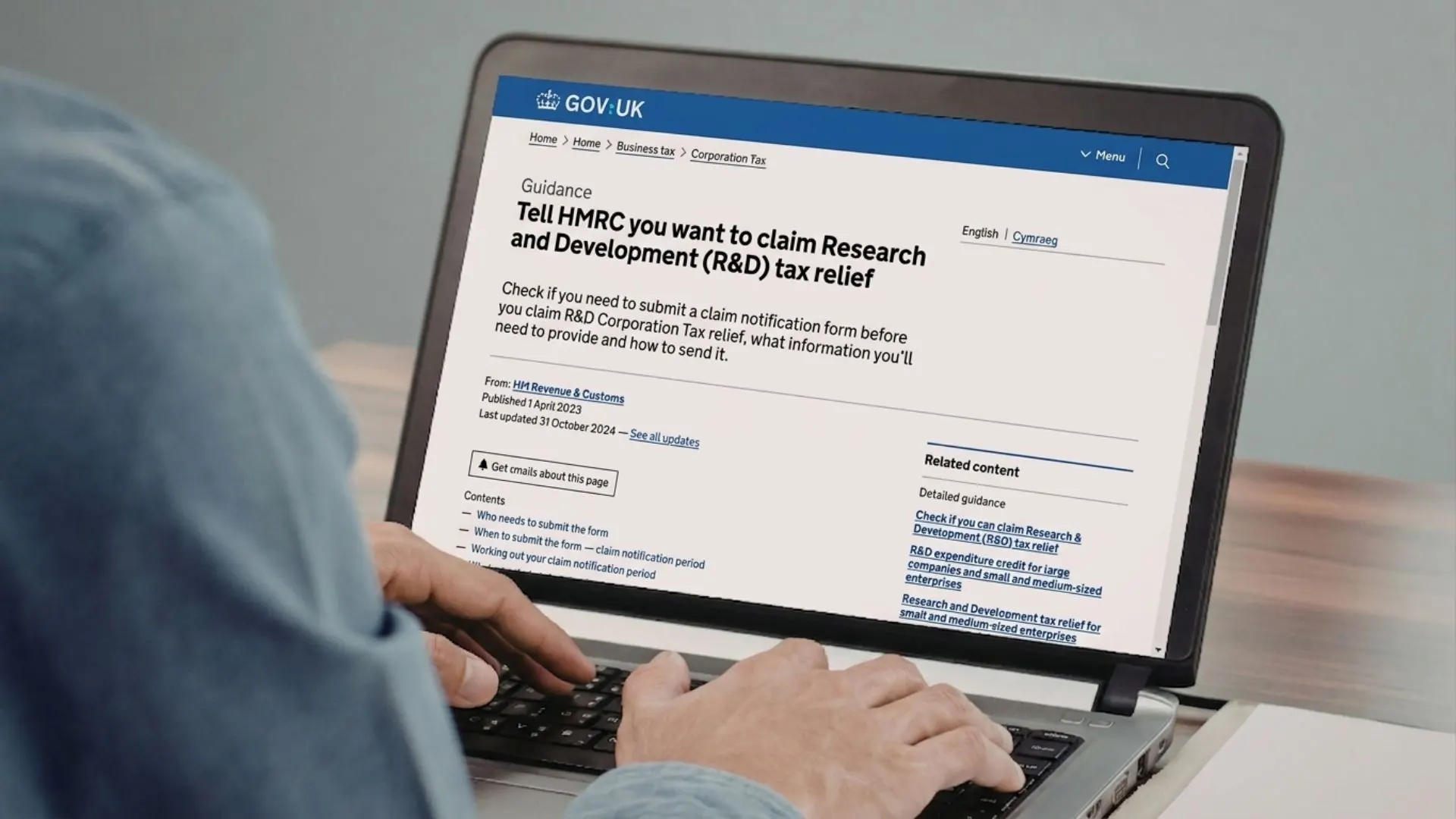
You must submit a Claim Notification Form if you are claiming for the first time or have not claimed in the last three years. If required, it must be submitted within six months of the end of the accounting period, or the claim may not be accepted.
It often makes sense when qualifying activity is unclear, records are weak, cost treatment feels uncertain, or the team is unable to clearly explain how the claim has been constructed and supported before submission.

Written by: Laura Velasquez
Marketing Manager focused on Tax Incentives for Innovation
01708 925 641

Every customer and every claim we work with benefits from our deep expertise in how HMRC manages R&D tax credit applications.

We’ve brought together all the tools you need to maximise your R&D tax relief claims.
More
Implications of the Spring 2022 statement and supporting Treasury documents on R&D Tax Relief.
More
As maritime safety regulations tighten, innovation is crucial. Companies invest in R&D to develop impact-resistant materials, fire suppression systems, and life-saving equipment.
More
Keeping accurate R&D records can feel like a challenge, but it doesn’t have to be. In this article, we’ll break things down and show you why good record-keeping matters.
MoreIf you'd like to learn how R&D Tax Relief could support your business, our team is here to help you.
Stay informed on the latest R&D Tax Relief updates, gain exclusive insights from our experts, and receive industry-specific tips by signing up for Easy R&D’s newsletter.